
- |
- |
- ProductsATG(Antibody Production)YKYS(Cell Therapy)OthersTS(Viral Vaccine Production)Ion Exchange ResinsMultimodal ResinsHydrophobic Interaction ResinsSize Exclusion Resins
- |
- Services
- |
- |
- |
Newcastle disease solution

一、Newcastle disease epidemic trend in chickens
Newcastle disease (NDV) is a highly contagious viral disease caused by a
paramyxovirus. Also known as Asian fowl plague or pseudofowl plague, it
typically presents with acute septicemia. Key characteristics include respiratory distress, loose stools, neurological disorders, and hemorrhage of mucous
membranes and serous membranes. It has a high mortality rate and poses a
serious threat to the poultry industry. It is a major viral infectious disease that continues to threaten the global poultry industry. Its epidemic trend is influenced by viral evolution, control pressures, and changes in farming practices, resulting in viral genotyping with certain genotypes becoming dominant.:
From a genetic perspective, NDV can be divided into two main branches: Class I and Class II, each further subdivided into different genotypes. Class II is the
dominant branch: all Newcastle disease viruses (NDV) currently causing global
epidemics and outbreaks belong to Class II. Class I mainly exists in wild
waterfowl and has lower pathogenicity.
Global prevalence of Class II clade genotype VII (especially VII.1.1 and VII.2):
Since its emergence in the late 1980s, genotype VII has replaced the traditional genotypes II, III, and IV, becoming the dominant genotype prevalent in poultry across Asia, Africa, Europe, and the Middle East.
Strains of this genotype are typically highly virulent, causing more acute and
severe clinical symptoms, resulting in higher mortality rates, and posing a greater challenge to traditional vaccines (such as the La Sota strain and Clone 30
strain, which belong to genotype II).
Regional Prevalence of Other Genotypes: Besides genotype VII, other genotypes
such as VI also persist in specific regions and among specific poultry
breeds (such as pigeons), creating a complex disease ecosystem.
Currently, the prevalence of Newcastle disease is mainly characterized by:
genotype VII being dominant; increased atypical clinical symptoms; and
challenges to vaccine control due to viral shedding. Developing a reasonable
immunization program, combining the advantages and disadvantages of
live attenuated vaccines (inducing mucosal immunity) and inactivated
vaccines (inducing high levels of humoral immunity), is crucial to ensuring that
flocks develop uniform, durable, and high-level antibodies to meet the current
needs of poultry farms.


二、Existing solutions
Currently, Newcastle disease prevention and control mainly focuses on
establishing a biosafety system to block the virus from entering farms and
scientific vaccination. The primary vaccine is still the chicken embryo vaccine.
Simply put, a chicken embryo vaccine involves inoculating the Newcastle disease
virus into the allantoic cavity of SPF (short-immune laying hen embryos are still
widely used due to cost and supply considerations) chicken embryos at a specific
age (usually 9-11 days old), allowing the virus to replicate and multiply rapidly
within the embryo. Subsequently, different treatments are performed depending
on the type of vaccine required.
Brief Production Process of Chicken Embryo vaccine
Select SPF chicken embryos of appropriate age (generally 9-11 days old) free of specific pathogens to ensure the purity of raw materials and the absence of exogenous viral contamination.
Then the selected vaccine strain (such as the La Sota strain) is inoculated into the allantoic cavity of the chicken embryo.
The inoculated chicken embryos are then placed back into the incubator to continue culturing for a certain period of time (usually 48-72 hours) to allow the virus to replicate in large quantities.
Finally, the allantoic fluid was harvested, purified, and tested.
Chicken embryo vaccines remain the primary production method for both live and inactivated Newcastle disease vaccines on the market, as the technology is mature, widely used, and exhibits good immunogenicity. However, chicken embryo vaccines require the use of age-appropriate SPF hatching eggs, have a long production cycle, involve complex inoculation procedures, and carry potential contamination risks.
三、Yishengke's All-Suspension Cell-Derived Newcastle Disease Vaccine Program
1.Optimization of modified cell lines: Plasmids were constructed using genetic engineering techniques and introduced into cells. Cell lines successfully introduced were screened under environmental stress. SDS-PAGE and ELISA techniques were used to verify the correct protein expression yield, selecting cell lines with high expression levels and excellent growth. Finally, flow cytometry was used to select single cells with high expression levels, which were then cultured into monoclonal cell lines.
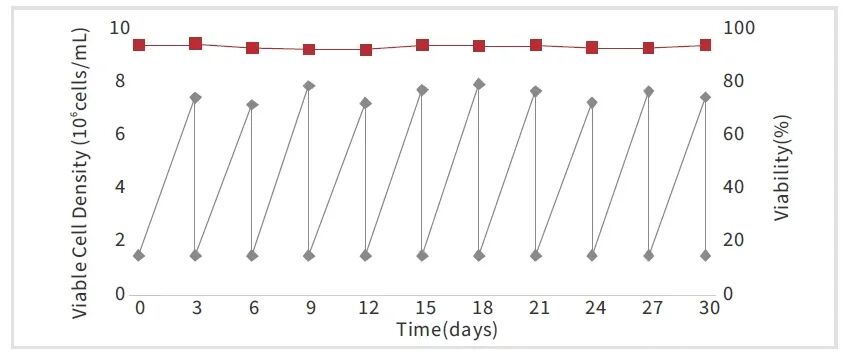
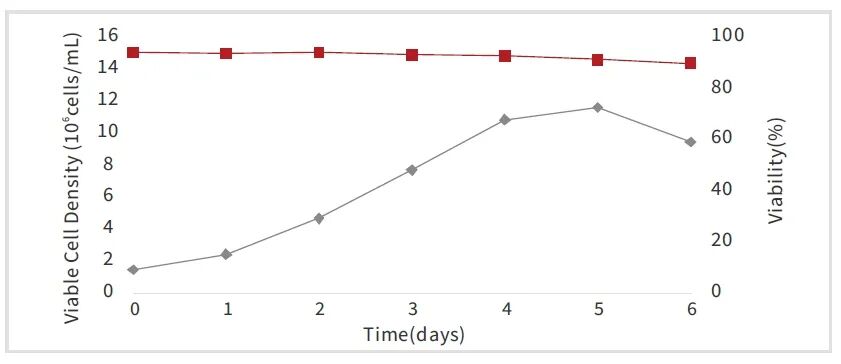
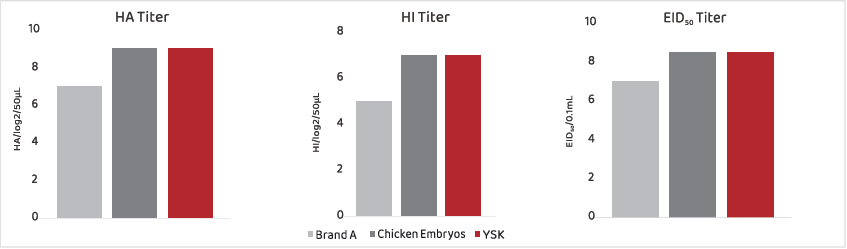
2.Ensuring antigen yield and quality: The Newcastle disease vaccine derived from fully suspended cells can reach the same level as chicken embryos (HA=9-11, EID50≥9/0.1ml), with high virus titer and good immune level.
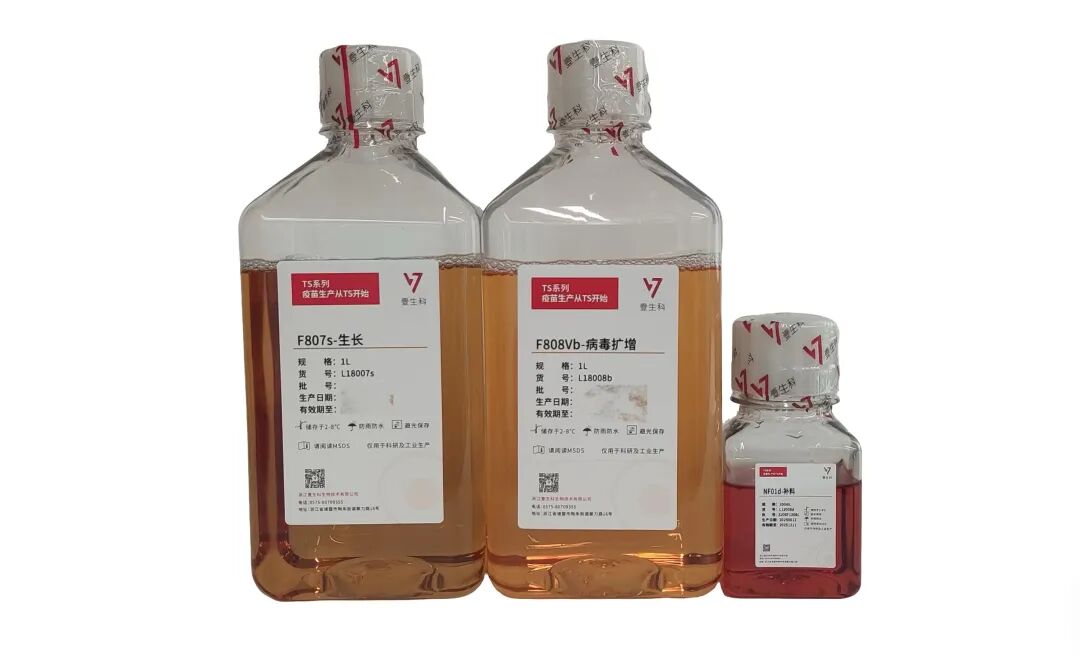
3.Highly user-friendly process:
Short vaccine production cycle; seed cells can be scaled up to 1:5 or higher. Stable vaccine production; cell culture remains stable after more than 40 generations.
Simple inoculation process; reactor operation is simpler and more controllable
than chicken embryos, safe and efficient, suitable for
large-scale production, and lower cost. Applicable to multiple Newcastle disease
genotype VII vaccine strains.
4.Lower cost: The overall cost is 30% lower than that of chicken embryos.


 +86 (0575) 8070 9355
 +86 (0575) 8070 9355
 marketing@yskbio.com
 No. 16, Juli Road, Zhuji City, Zhejiang Province
©2023 版权所有